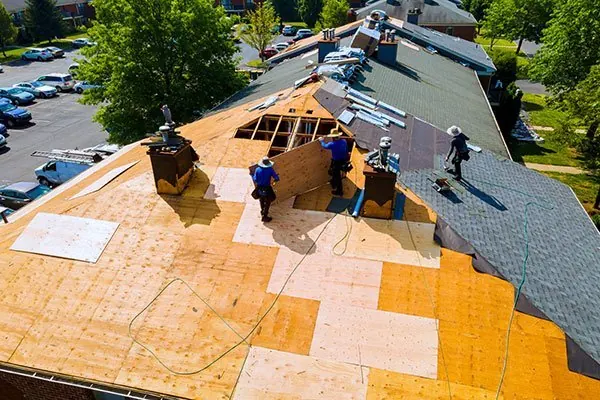
Re-roofing in Melbourne at a glance
Roof Repair Melbourne VIC arranges re-roofing quotes for houses and small buildings across Greater Melbourne. A re-roof removes the existing covering, whether concrete tile, terracotta, slate or old galvanised iron, checks the frame, and installs new battens, sarking or an insulation blanket, and a new roof in Colorbond steel or tile. Gutters, downpipes and flashings are often renewed in the same job. The work is done by independent local roofing contractors after a free on-site inspection.
When re-roofing makes more sense than another repair
A repair is the right answer when damage is limited. A re-roof becomes the sensible choice when the problems are everywhere at once. Typical triggers on Melbourne homes include:
- Concrete tiles from the 1950s to the 1980s that have lost their surface, absorb water and break when walked on.
- Galvanised iron on older weatherboards and terraces with rust at most of the laps and nail holes.
- A roof that has had several leak repairs in different places within a few years.
- Battens that have rotted or sagged, or a roof with no sarking at all.
- An owner who wants better insulation and lower maintenance and is happy to change the look.
Our guide to the signs of a roof that needs replacing goes through each of these in more depth.
Choosing what goes back on
Colorbond steel
Pre-painted steel is the most common choice for Melbourne re-roofs. It is light, quick to install and available in profiles that suit everything from a weatherboard cottage to a modern two-storey home. Lighter colours reflect more summer heat. Near the bay, ask about the coastal recommendations for the steel grade and fixings. The Colorbond roofing page covers profiles and colours.
New tiles
Concrete and terracotta tiles still suit many streets and some owners prefer their look and quieter sound in rain. They are heavier, so the frame needs to be capable of carrying them, and the job takes longer. See tiled roof replacement and terracotta roof replacement.
Slate
Slate is a specialist re-roof, usually on period homes where heritage controls apply. It is slow and skilled work. Our slate roof page explains the options.
What happens on a typical job
- Scaffold or edge protection goes up and materials are delivered.
- One section at a time, the old covering is stripped and taken away.
- The frame is checked. Any damaged timber is reported before it is fixed.
- New battens, sarking or a blanket, and the new roofing are installed.
- Ridges, hips, valleys and wall flashings are completed, then gutters and downpipes.
- The site is cleaned and, for roof plumbing work, a compliance certificate is issued where required.
The full sequence is set out in our step-by-step guide.
Permits and paperwork
Victoria's building rules treat a straight swap of roof covering differently from work that changes the structure or the roof's shape. Many re-roofs need no building permit, but a heavier material, new framing, a Heritage Overlay or a Bushfire Management Overlay can change that. Check with your council or a registered building surveyor before work starts, and read our guide to building codes and permits for Melbourne roofs. Prices for re-roofing are in the 2026 price guide.