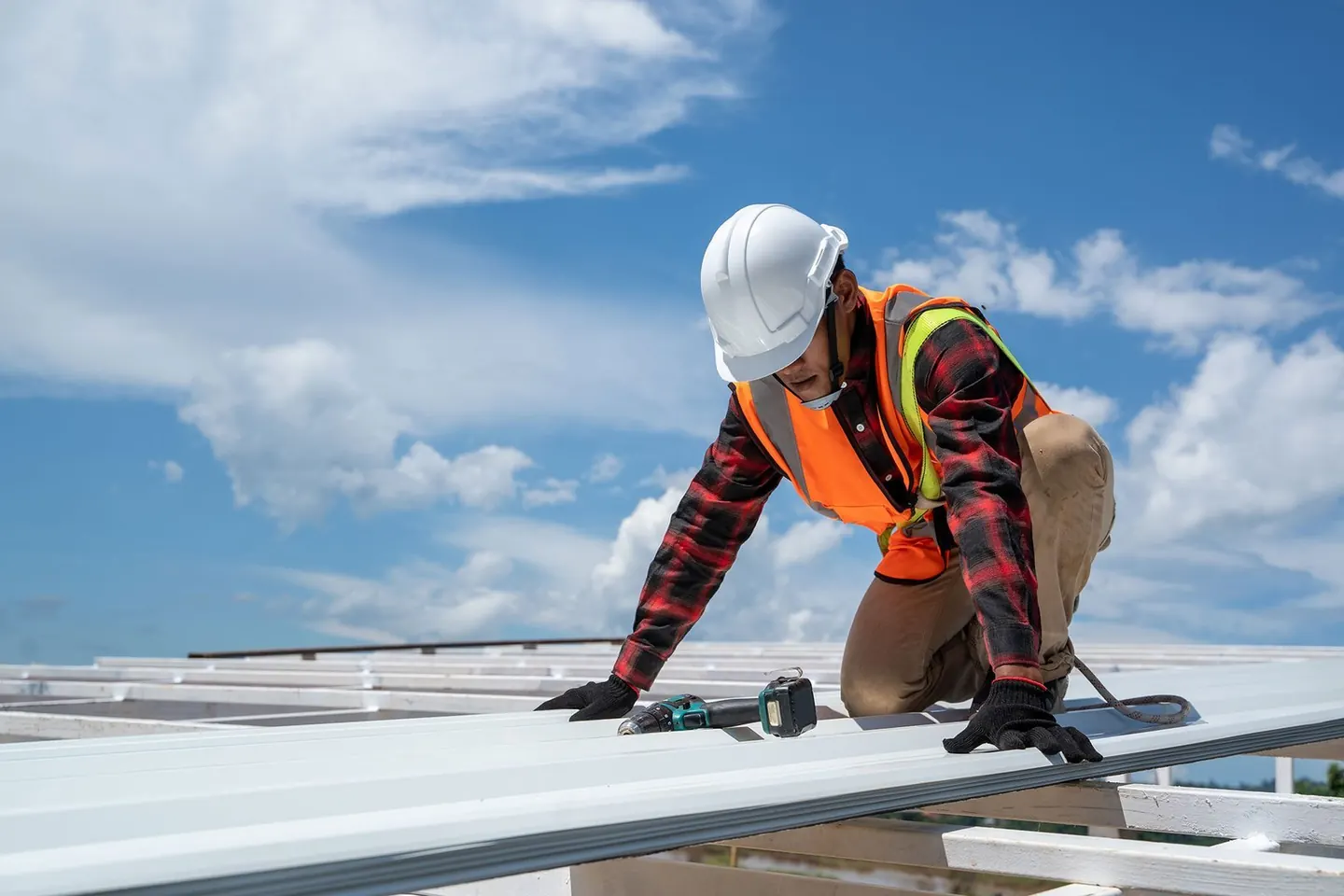
Metal roof replacement in Melbourne
Roof Repair Melbourne VIC arranges metal roof replacement quotes across Greater Melbourne. Typical jobs are rusting galvanised iron on older weatherboard cottages and terraces, tired Zincalume or painted steel on post-war and later homes, and low-pitch skillion roofs on extensions. The old sheets come off, battens are checked, an insulation blanket goes in, and new steel sheets, flashings and usually gutters are installed. Sheet roofing is roof plumbing in Victoria, and the work is done by independent local contractors after a free on-site inspection.
Signs your metal roof is done
- Rust along the overlaps where sheets meet, and around every nail or screw.
- Holes that let daylight into the roof space.
- Sheets that lift and bang in strong wind because the fixings have loosened.
- Flashings that are rusted, cracked or held on with sealant alone.
- Box gutters or valley gutters that have rusted through.
- Leaks that move around after each repair.
Galvanised iron from the first half of the twentieth century, common across the inner north and west, often shows all of these at once.
What changes when the roof is replaced
Fixings
Many old iron roofs were nailed down. New sheets are screwed to battens with screws suited to the steel and the wind loading for your site. That alone stops much of the rattling and leaking older roofs suffer.
Under the sheets
A foil-faced blanket or a vapour-permeable membrane goes under the new roof. It reduces heat coming into the house on hot days, quietens rain noise, and helps manage condensation. Our ventilation guide explains why that matters on metal roofs.
Profile and pitch
Corrugated suits period homes and most pitched roofs. Trapezoidal and other wide-rib profiles cope better with low pitches and long runs. The manufacturer sets a minimum pitch for each profile, so a very flat skillion may need a different profile from the main roof.
Materials that sit together
Some metals corrode each other when in contact or when water runs from one to another. Copper pipes or lead flashings draining onto coated steel are a classic problem. A competent roof plumber checks for this when specifying flashings and gutters.
Near the bay and in bushfire areas
If your home is close to Port Phillip Bay or exposed to sea spray, ask the contractor which steel grade and fixings the manufacturer recommends for that distance from the coast. In bushfire-prone parts of the outer east and peninsula, the roof needs to suit the property's Bushfire Attack Level, including ember protection at the ridge and gutters. Our bushfire preparation guide explains how that is assessed.
Paperwork and registration
Roof plumbing work in Victoria should be done by someone registered or licensed in the roofing class, and qualifying work comes with a compliance certificate from the plumber. Ask for it at the end of the job and keep it with your house papers. We ask the contractors we work with to hold the registrations and insurance their job needs; ask to see them and check the regulator's public register.
For a straightforward replacement in steel, most homes will not need a building permit, but structural changes and some overlays can alter that. Read the permits guide before work starts, and see the price guide for 2026 planning figures.