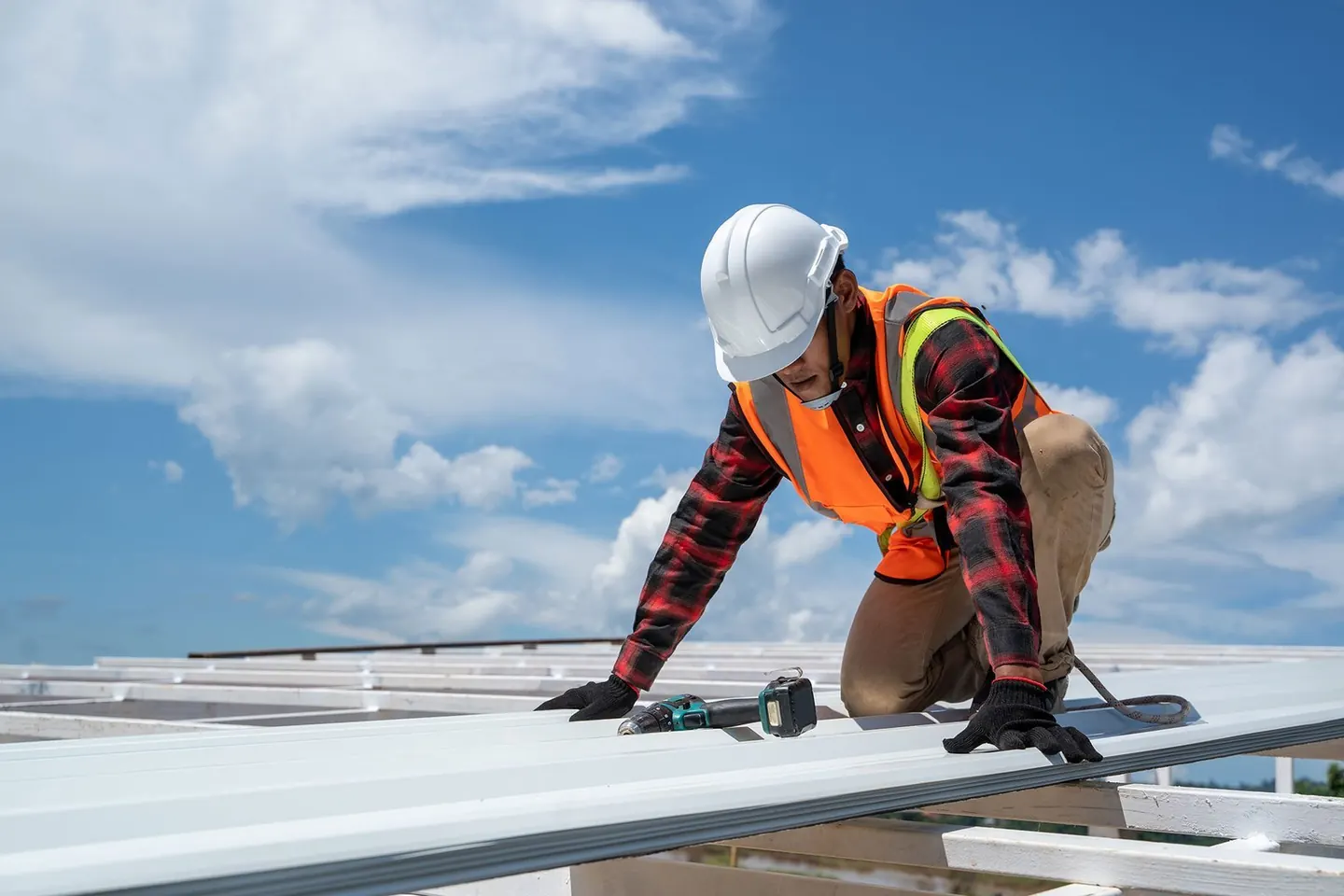
The layers of protection on a new roof
When people talk about a "roof warranty", they usually mean one document. In practice a new roof in Melbourne carries several overlapping protections, each from a different source:
- The manufacturer's material warranty, covering the tiles, sheets or coatings themselves.
- The contractor's workmanship warranty, covering how the roof was installed.
- Consumer guarantees under the Australian Consumer Law, which apply automatically to goods and services.
- Statutory warranties under Victoria's Domestic Building Contracts Act 1995, which apply to domestic building work.
The first two are offered voluntarily and their terms vary. The last two are set by law and cannot be signed away. One point needs to be clear up front: Roof Repair Melbourne VIC does not provide any of these. We refer homeowners to independent contractors; the warranty relationship is between you, your contractor and the manufacturer.
Manufacturer material warranties
Most major roofing products sold in Australia come with a written warranty from the manufacturer. These generally cover defects in the product, such as a coating failing prematurely, steel perforating from corrosion, or tiles cracking from a manufacturing flaw.
They normally do not cover:
- damage caused by poor installation,
- storm, hail or impact damage,
- damage from incompatible materials or debris left on the roof,
- normal weathering, fading or minor colour change,
- problems from lack of reasonable maintenance.
Location conditions
Steel roofing warranties are often tied to the environment. Properties close to breaking surf or the bay, near industrial emissions or in other harsh settings may face reduced cover or need a different grade of product. Homes along the Mornington Peninsula or bayside suburbs are the obvious Melbourne cases. Some warranties also ask that areas not washed by rain, such as under eaves, be rinsed periodically.
Before signing a quote, ask the contractor to confirm the product suits your address and to give you the manufacturer's warranty terms for that specific product.
Contractor workmanship warranties
A workmanship warranty is the contractor's promise about their own installation. It might cover leaks from poor flashing work, loose fixings, poorly bedded ridge capping or gutters with incorrect fall.
The length and conditions are set by each business, so read them closely. Questions worth asking:
- What period does the warranty run for, and does it start at completion or final payment?
- What exactly is covered, and what is excluded?
- How do I make a claim, and how quickly will someone attend?
- Is the warranty affected if another trade, such as a solar or antenna installer, later works on the roof?
- What happens if the business closes?
The Australian Consumer Law
Separate from any written warranty, the Australian Consumer Law gives automatic consumer guarantees. Services must be provided with due care and skill and be fit for any purpose you made known. Goods must be of acceptable quality. If a roof fails these guarantees, you may be entitled to a repair, replacement or refund, depending on how serious the failure is.
A business cannot exclude these guarantees, even if a contract or warranty document seems to suggest otherwise. Consumer Affairs Victoria publishes guidance on how they apply.
Victoria's domestic building statutory warranties
For domestic building work, the Domestic Building Contracts Act 1995 implies warranties into the contract. In broad terms, these include that the work will be done in a proper and workmanlike manner, in line with the plans and specifications, with suitable materials, and in compliance with the law. Whether a particular roofing job falls under the Act depends on its nature and value, so ask the contractor or seek advice if you are unsure.
The Act also sets rules for major domestic building contracts, such as written contracts, deposits and, above a certain value, domestic building insurance. Your contractor should be able to explain which rules apply to your job.
Comparing the protections
| Protection | Who provides it | What it typically covers | Can it be excluded? |
|---|---|---|---|
| Manufacturer warranty | Product manufacturer | Defects in materials | Terms set by manufacturer |
| Workmanship warranty | Your contractor | Installation quality | Terms set by contractor |
| Consumer guarantees | Australian Consumer Law | Due care, fitness, acceptable quality | No |
| Statutory warranties | Domestic Building Contracts Act 1995 | Proper workmanship, suitable materials, legal compliance | No |
What tends to void a warranty
Some of the commonest reasons claims are rejected:
- installation that departs from the manufacturer's guide, such as low pitch or wrong fixings,
- mixing incompatible metals, such as copper or lead runoff onto Zincalume steel,
- metal filings from drilling left on steel sheets,
- walking damage or later trades cutting into the roof without care,
- blocked gutters left for long periods, causing overflow damage,
- using a product in an environment it is not rated for.
Gum leaves are a particular Melbourne issue. Leaf litter that sits in valleys and gutters holds moisture against the metal. Regular clearing is cheap insurance, and our gutter replacement guide discusses guard options.
Your side of the bargain: maintenance
Most written warranties expect the owner to look after the roof in a reasonable way. That rarely means anything onerous. Typical expectations include keeping gutters and valleys clear, trimming overhanging branches so they do not scrape the surface, rinsing sheltered areas of steel that rain does not reach, and arranging prompt repairs when damage is noticed.
A simple routine works well for most Melbourne homes: a look from the ground after any big storm, a gutter clean before winter and again before the bushfire season, and a closer inspection every few years. Keep dated photos of each check. If a claim is ever disputed, a record showing the roof was looked after carries real weight.
Bear in mind, too, that a warranty only works if you can find it. Scan every document the week the job finishes and save copies somewhere you will still have access to in ten years' time.
Get everything in writing
Before work starts, ask for:
- the manufacturer's warranty document for each product,
- the contractor's workmanship warranty, as part of the contract,
- confirmation that the product suits your location.
When the job is done, keep the final invoice, the plumber's compliance certificate for qualifying roof plumbing work, any building permit documents, product colour and batch details, and photos of the finished roof. Store them together, digitally and on paper. If you later sell, handing this bundle to the buyer is a simple way to show the roof was installed and certified properly.
If something goes wrong
- Photograph the problem and note when you first noticed it.
- Contact the contractor in writing and keep a copy.
- If it looks like a material defect, ask the contractor to help lodge a claim with the manufacturer.
- If you cannot resolve it, contact Consumer Affairs Victoria or Domestic Building Dispute Resolution Victoria for guidance.
- For storm damage, contact your home insurer instead, since storms are usually an insurance matter rather than a warranty one. Our page on common roofing issues after storms can help you describe the damage.
Choosing a contractor with warranties in mind
When comparing quotes, warranty terms deserve as much attention as price. Our guide on how to choose a roofing contractor in Melbourne covers registration and insurance checks, while Colorbond roofing explains material choices for steel. We ask the contractors we refer to hold the registrations and insurance their work requires, and we encourage you to see those documents, along with the warranty terms, before you sign. To arrange free quotes, visit contact us.